Honed vs. Polished Stone: Differences, Benefits & Uses | GFO Stone
November 5, 2026
On this page
When selecting natural or engineered stone, the material itself is only part of the decision. The surface finish plays an equally important role in the final appearance, feel, maintenance requirements, and overall design.
Two of the most popular stone finishes are honed and polished. Although both can be applied to a variety of stone surfaces, they create distinctly different looks.
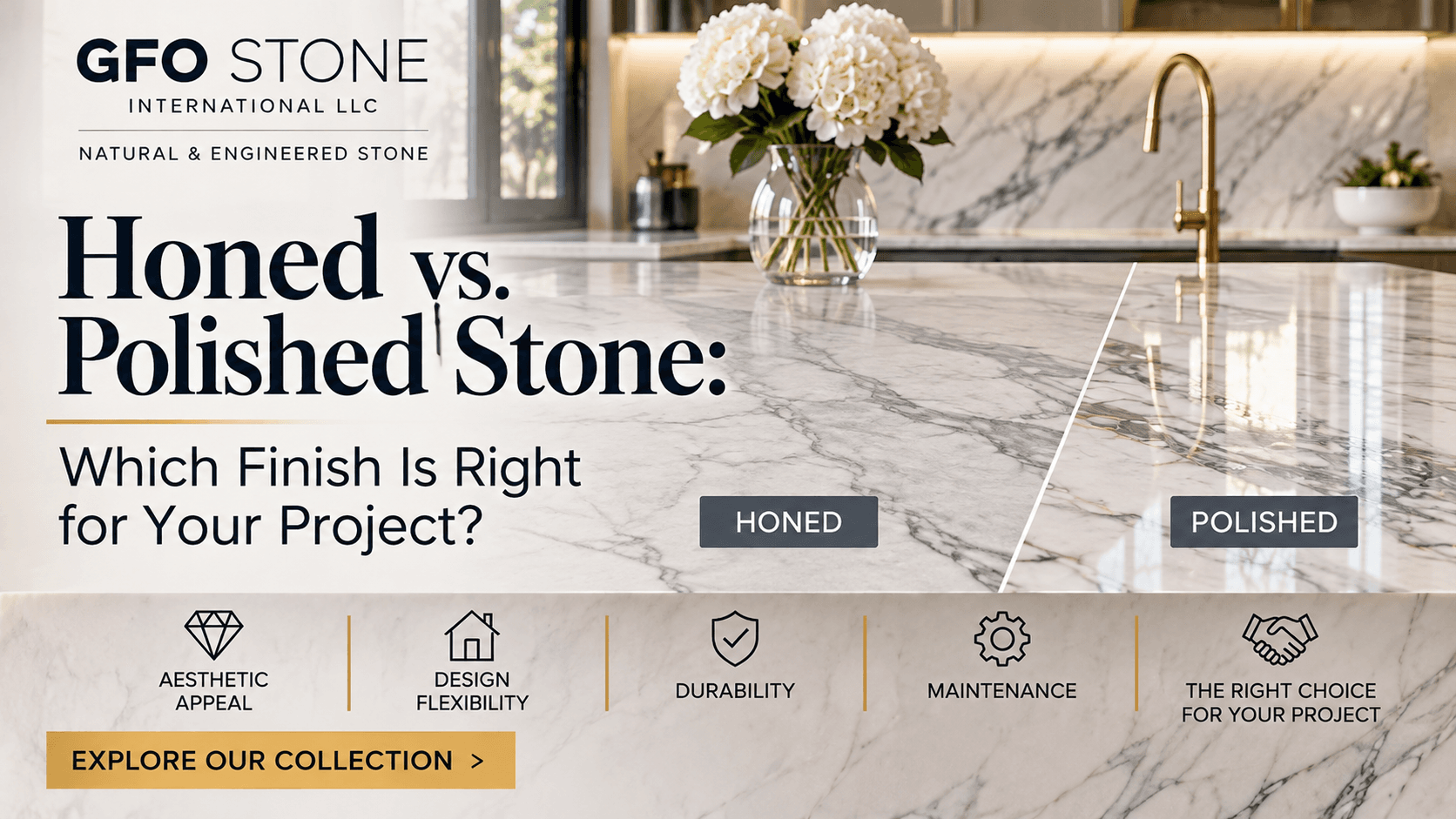
A polished finish delivers a smooth, reflective appearance that highlights color, depth, and veining. A honed finish offers a softer, matte appearance that creates a more understated and contemporary aesthetic.
For fabricators, contractors, builders, architects, and interior designers, understanding the difference between honed vs. polished stone helps ensure the selected material supports the project's design goals and practical requirements.
At GFO Stone, our collections of Quartz, Quartzite, Granite, Marble, and Porcelain offer a range of colors, patterns, and surface options for residential and commercial projects.
What Is a Polished Stone Finish?
A polished finish is a smooth, glossy surface that reflects light and creates a vibrant appearance.
The polishing process uses progressively finer abrasives to refine the stone surface until it achieves a high level of smoothness and shine.
Polished stone is popular for its ability to emphasize the material's natural characteristics.
Key characteristics of polished stone include:
- Glossy, reflective surface
- Smooth feel
- Enhanced visual depth and color
- Strong contrast and definition in many veined materials
- A refined, traditional, or luxurious appearance
Polished finishes are frequently selected for kitchen countertops, bathroom vanities, backsplashes, and decorative architectural applications.
Advantages of Polished Stone
1. Enhances Color and Veining
The reflective surface can make colors appear richer and help emphasize the movement and details within natural stone.
2. Creates a Bright Appearance
Polished surfaces reflect available light, which can help a room feel brighter and visually more open.
3. Smooth Surface
The smooth finish is easy to wipe down during routine cleaning, although the stone's underlying characteristics and recommended care requirements still apply.
4. Classic and Versatile Design
Polished stone works well in traditional, transitional, contemporary, and luxury interiors.
Considerations for Polished Stone
- Reflections and glare may be more noticeable under strong lighting.
- Water spots, fingerprints, and surface residue can be visible depending on the material and lighting.
- Scratches and etching may still occur, particularly on susceptible natural stones.
- A polished surface does not eliminate the need for appropriate sealing or maintenance.
What Is a Honed Stone Finish?
A honed finish has a smooth, matte or low-sheen appearance without the strong reflection associated with polished stone.
The surface is refined through abrasive processing, but the finishing process stops before the material develops a glossy polish.
Honed stone is often selected for projects that favor subtle textures, soft visual transitions, and contemporary design.
Key characteristics of honed stone include:
- Matte or low-sheen appearance
- Smooth or slightly textured feel, depending on the material
- Reduced light reflection
- Softer visual presentation
- Contemporary and understated aesthetic
Honed finishes are commonly used for countertops, flooring, bathroom surfaces, and architectural features.
Advantages of Honed Stone
1. Soft, Natural Appearance
A honed finish creates a quieter visual effect that allows the material's color and pattern to complement the surrounding design.
2. Reduced Reflection
The matte appearance limits the glossy reflections associated with polished surfaces.
3. Contemporary Design Appeal
Honed stone pairs well with minimalist interiors, natural wood cabinetry, warm neutrals, and understated architectural details.
4. Different Visual Character
A honed finish can give the same stone a noticeably different appearance from its polished counterpart.
Considerations for Honed Stone
- Some honed natural stones may be more susceptible to visible staining because the surface can have a different absorption behavior than its polished counterpart.
- Darker honed surfaces may show fingerprints, oils, and certain marks.
- The matte appearance may require different cleaning practices depending on the stone.
- Honed finishes do not automatically make a material scratch-proof, stain-proof, or maintenance-free.
Honed vs. Polished Stone: What's the Difference?
The main difference is the appearance and reflectivity of the finished surface.
| Feature | Honed Finish | Polished Finish |
|---|---|---|
| Appearance | Matte or low-sheen | Glossy and reflective |
| Light reflection | Limited | High |
| Visual effect | Soft and understated | Rich and vibrant |
| Surface feel | Smooth or slightly textured | Very smooth |
| Design style | Modern, natural, minimalist | Classic, elegant, luxurious |
| Fingerprints and residue | Depends on color and material | Depends on color and material |
| Maintenance | Material-specific | Material-specific |
Neither finish is universally better. The right choice depends on the material, intended application, design preferences, and maintenance expectations.
Which Finish Is Better for Kitchen Countertops?
Both honed and polished stone can be used for kitchen countertops, but the best choice depends on the type of stone and how the surface will be used.
Polished Kitchen Countertops
Polished countertops are a popular choice for kitchens because of their reflective appearance and smooth surface.
They can highlight the veining of marble and quartzite while creating a clean, finished look.
Polished surfaces are often considered for:
- Contemporary kitchens
- Traditional kitchens
- Luxury kitchen islands
- Light-colored countertop designs
- Dramatic veined stone selections
Explore GFO Quartz and GFO Quartzite for materials suitable for a variety of kitchen design styles.
Honed Kitchen Countertops
Honed countertops offer a softer alternative to a glossy surface.
They are often selected for kitchens with natural materials, textured cabinetry, warm finishes, and minimalist design elements.
Honed surfaces may be particularly appealing for:
- Modern farmhouse kitchens
- Contemporary kitchens
- Warm neutral interiors
- Natural and organic design styles
- Projects seeking a matte appearance
When considering honed marble or other natural stone, discuss staining, etching, sealing, and maintenance expectations with the material supplier and fabricator.
For additional kitchen material guidance, read How to Choose the Right Stone for a Kitchen Countertop.
Honed vs. Polished Marble
Marble is available in both honed and polished finishes, and the choice can significantly influence its overall appearance.
Polished Marble
Polished marble emphasizes its natural veining and creates a glossy surface.
It is frequently selected for:
- Kitchen countertops
- Bathroom vanities
- Decorative wall applications
- Luxury interiors
- Traditional and transitional spaces
Honed Marble
Honed marble creates a softer, more understated appearance.
It is often considered for:
- Contemporary kitchens
- Bathroom surfaces
- Flooring
- Minimalist interiors
- Natural and warm design palettes
Important: Marble is susceptible to etching from acidic substances, regardless of whether it has a honed or polished finish. A honed surface may make certain etch marks less visually obvious, but it does not prevent them.
Explore the GFO Marble collection to compare available colors, patterns, and finishes.
Honed vs. Polished Quartzite
Quartzite is a natural stone known for its distinctive mineral patterns, veining, and range of colors.
A polished quartzite finish can emphasize the stone's depth and natural movement, while a honed finish provides a more subdued appearance.
Both options can be considered for kitchen countertops, islands, bathroom applications, and other interior surfaces, subject to the specific material's characteristics.
Explore the GFO Quartzite collection for natural stone selections.
You can also read Why Quartzite Is One of the Most Sought-After Natural Stones in 2026 for more information about quartzite's design appeal.
Honed vs. Polished Granite
Granite is another versatile natural stone that can be finished in different ways.
Polished granite is widely recognized for its glossy appearance and ability to highlight the mineral composition of the stone.
Honed granite offers a more subtle look, making it an option for projects that favor matte surfaces.
When comparing the two, consider:
- The granite's natural color and mineral pattern
- Whether a reflective or matte appearance is preferred
- The intended application
- Cleaning and maintenance requirements
- The availability of the selected finish
Explore GFO Granite to view natural granite selections for residential and commercial projects.
What About Quartz and Porcelain Finishes?
Engineered surfaces also offer different surface appearances, although the available options depend on the specific product and manufacturer.
Quartz
Engineered quartz is available in a variety of finishes, including polished and, for selected designs, matte or honed-style appearances.
Polished quartz often provides a bright, reflective look. Matte options can create a softer, more contemporary aesthetic.
Always confirm the actual finish offered for the specific quartz product.
Browse GFO Quartz for available colors and designs.
Porcelain
Porcelain surfaces are available in multiple finishes, depending on the product.
These may include polished, matte, and other specialized surface treatments.
The choice can influence how the material looks under lighting and how it complements cabinetry, flooring, and other finishes.
Explore GFO Porcelain for available designs and surface options.
How to Choose the Right Finish for Your Project
Selecting a stone finish should involve more than deciding whether you prefer a glossy or matte appearance.
Consider these important factors before making a selection.
1. Overall Design Style
Think about the atmosphere you want to create.
- Polished stone can complement elegant, traditional, and high-contrast interiors.
- Honed stone can complement minimalist, contemporary, and natural design styles.
2. Lighting Conditions
Lighting can significantly affect how a stone finish appears.
Polished surfaces reflect more light, while honed surfaces create less reflection.
Review samples and actual slabs under lighting conditions similar to the intended installation environment whenever possible.
3. Intended Application
A kitchen countertop, bathroom vanity, fireplace surround, and floor may have different performance and maintenance requirements.
The selected finish should be appropriate for the application and the specific material.
4. Cleaning and Maintenance
Understand the care requirements before selecting a surface.
Natural stone may require periodic sealing, depending on the material and product recommendations. Engineered quartz and porcelain have different care requirements.
For additional guidance, see Countertop Care and Maintenance: A Complete Guide for Quartz, Quartzite, Granite, Marble and Porcelain.
5. Material Availability
Not every material is available in every finish.
Confirm the available finish, dimensions, thickness, and inventory before finalizing project specifications.
6. Actual Slab Appearance
A small sample may not fully represent the appearance of a large slab.
Whenever possible, review the actual material to evaluate its color, veining, surface finish, and overall visual character.
Can the Same Stone Look Different in Honed and Polished Finishes?
Yes. The same stone can look noticeably different depending on its surface finish.
A polished surface can make colors and patterns appear more vibrant because of its reflective quality.
A honed surface generally produces a softer appearance with less surface reflection.
This difference can influence the way a material coordinates with:
- Cabinetry
- Flooring
- Wall finishes
- Hardware
- Lighting
- Other decorative materials
For designers and architects, comparing both finishes can help determine which presentation best supports the overall design.
Common Mistakes to Avoid When Selecting a Stone Finish
Before approving a material, consider avoiding these common mistakes:
- Choosing based only on a small sample: A sample may not represent the full slab's color, movement, or finish.
- Assuming honed means stain-resistant: A matte finish does not automatically provide better stain protection.
- Assuming polished means maintenance-free: Polished stone still requires appropriate cleaning and care.
- Ignoring lighting: Surface reflection can change the appearance of a room.
- Overlooking material-specific requirements: Marble, granite, quartzite, quartz, and porcelain have different care considerations.
- Not confirming availability: Verify that the desired material and finish can be supplied in the required quantity.
- Skipping fabrication discussions: The fabricator should review the material, finish, application, and project requirements before fabrication.
Explore Stone Finishes at GFO Stone
The right surface finish can make a significant difference in the final appearance of a project.
Whether you prefer the reflective elegance of polished stone or the understated appearance of a honed finish, selecting the right combination of material and finish starts with understanding the available options.
GFO Stone supplies premium natural and engineered stone slabs to fabricators, contractors, builders, developers, architects, designers, and other trade professionals.
Explore our collections:
Explore Our Collection: Browse GFO Stone Products
Contact Our Team: Request Product Information and B2B Pricing
Visit Our Showrooms:
- Garfield, NJ: 112 Monroe St | (973) 601-4436
- Bristol, PA: 2924 Veterans Hwy | (215) 714-4436
GFO Stone International LLC is a B2B wholesale importer and distributor of natural and engineered stone. We supply slabs to trade professionals and do not fabricate, cut, or install stone.