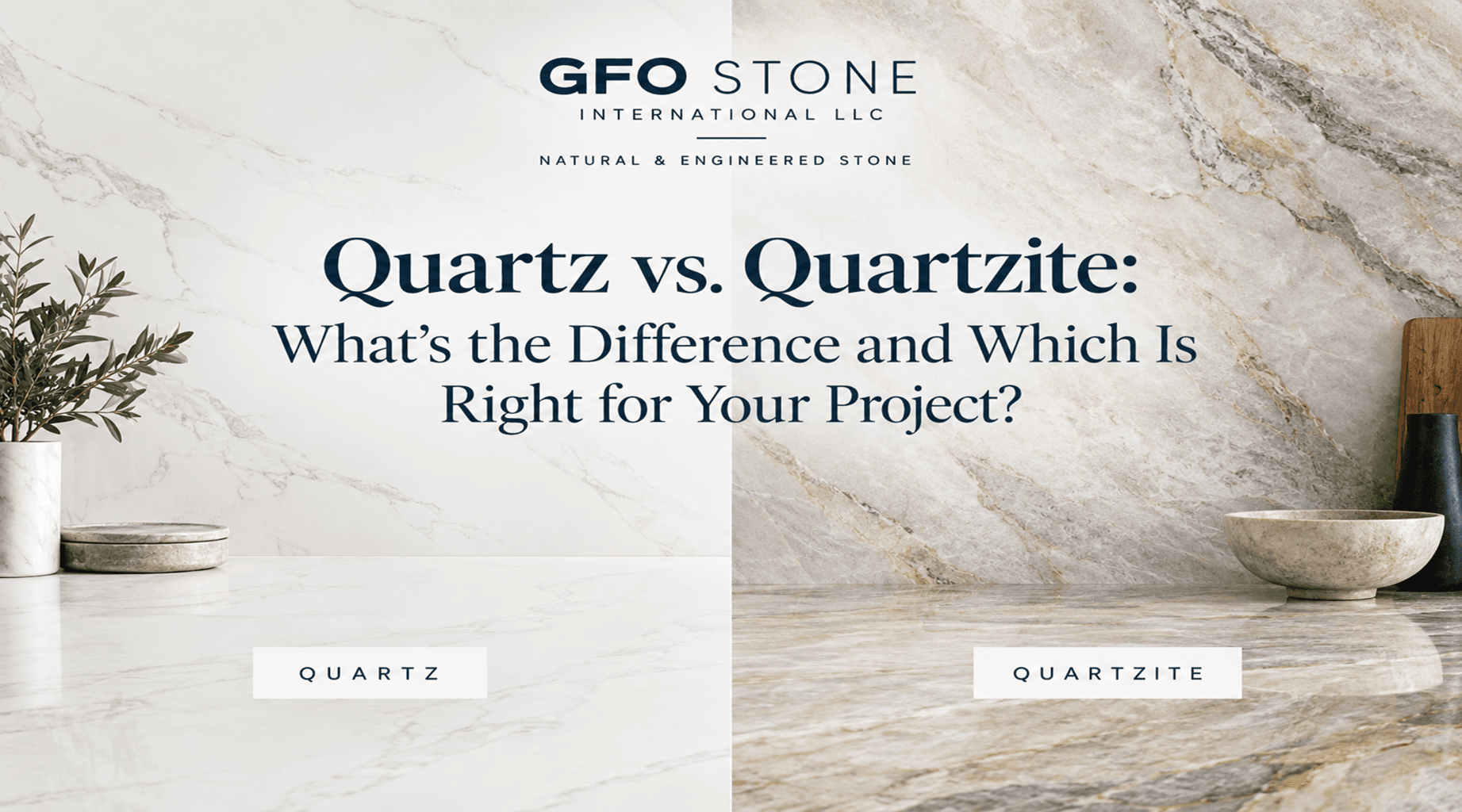
Quartz vs. Quartzite: What’s the Difference and Which Is Right for Your Project?
September 10, 2026
On this page
Quartz vs. Quartzite: when selecting a surface for a kitchen, bathroom, hospitality space, multifamily development, or commercial project, two materials frequently come to the top of the list: quartz and quartzite.
Despite their similar names, quartz and quartzite are fundamentally different materials. Quartz is an engineered surface, manufactured by combining mineral materials with resins and pigments, while quartzite is a natural stone formed by geological processes that transform quartz-rich sandstone under heat and pressure.
For fabricators, contractors, architects, designers, and builders, understanding the differences between quartz and quartzite is important when evaluating aesthetics, fabrication requirements, maintenance, project specifications, availability, and budget.
What Is Quartz?
Quartz is an engineered stone surface manufactured using a combination of quartz minerals and other materials, binders, resins, and pigments. Modern quartz surfaces are available in a wide range of colors and patterns, including designs inspired by natural marble, limestone, and other stones.
One of the biggest advantages of quartz is design consistency. Engineered manufacturing allows manufacturers to produce coordinated patterns and colors across multiple slabs, making quartz particularly useful for projects that require a more predictable appearance.
Quartz is commonly used for:
- Kitchen countertops
- Bathroom vanities
- Multifamily developments
- Hospitality projects
- Commercial interiors
- Retail environments
- Reception desks and other interior surfaces
For most projects, quartz can be an attractive option when design consistency, repeatability, and coordinated material selection are important.
What Is Quartzite?
Quartzite is a natural stone created when quartz-rich sandstone undergoes intense heat and pressure over geological time. The resulting stone can have a high concentration of quartz and often features dramatic movement, veining, and mineral variation.
Because quartzite is a natural stone, every slab can have its own visual characteristics. Veining, color, movement, mineral deposits, and other natural features can vary from slab to slab.
Popular quartzite styles include dramatic whites and neutrals such as Taj Mahal, Super White, Crystallo, Mont Blanc, and White Macaubas, as well as more distinctive materials such as Fusion and Baykal.
Quartzite is frequently selected for luxury residential and commercial projects where the natural character of the stone is an important part of the design.
Quartz vs. Quartzite: The Key Differences
The most important difference is simple:
Quartz is engineered. Quartzite is a natural stone.
That distinction affects appearance, production, slab consistency, fabrication considerations, maintenance requirements, and how the material should be selected for a project.
Appearance
Quartz offers highly controlled patterns and colors. Because the material is manufactured, designers can often achieve a more consistent appearance from slab to slab.
Quartzite provides the natural variation that makes natural stone unique. Depending on the quarry and material, a quartzite slab may feature dramatic veining, subtle movement, crystalline areas, mineral deposits, or variations in tone.
For projects where consistency is the priority, quartz may be a strong choice. For projects where natural movement and one-of-a-kind character are central to the design, quartzite may be preferred.
Durability
Both quartz and quartzite are widely used for countertops and other interior applications, but they behave differently because they are different types of materials.
Quartzite is a natural stone and is generally known for its hardness and durability. Quartz is engineered for residential and commercial surface applications and offers a durable, low-maintenance surface when properly specified and cared for.
The specific characteristics of a material can vary by product, so project teams should review the manufacturer's technical information and care recommendations before specifying a particular surface.
Maintenance
Quartz is generally selected for its relatively straightforward maintenance requirements. Routine cleaning with appropriate products is typically sufficient for everyday use.
Natural quartzite may require additional consideration depending on the specific stone and its finish. Some quartzites benefit from sealing to help protect the stone from staining.
Fabricators and project professionals should always follow the care and maintenance recommendations provided for the specific material.
Heat and Fabrication Considerations
Material selection should also account for how the surface will be fabricated and installed.
Quartz and quartzite have different fabrication characteristics and should be processed using procedures appropriate for the specific material. Fabricators should review manufacturer or supplier recommendations regarding cutting, tooling, edge profiles, installation, and heat exposure.
GFO Stone supplies slabs to professional customers and does not fabricate, cut, or install the material.
Which Is Better for Kitchen Countertops?
There is no single answer for every kitchen.
Quartz can be a strong choice when the project calls for a controlled appearance, coordinated slabs, and straightforward routine maintenance.
Quartzite can be an excellent choice when the design calls for authentic natural stone with distinctive veining and movement.
For luxury kitchens, quartzites such as Taj Mahal, Super White, Crystallo, and Mont Blanc can provide the visual character associated with premium natural stone.
The best choice depends on the project's design goals, fabrication requirements, maintenance expectations, and material availability.
Which Is Better for Bathroom Vanities?
Both materials can work well for bathroom applications.
Quartz offers a broad selection of colors and patterns and can provide a consistent design across multiple vanities.
Quartzite can add natural movement and visual depth to high-end bathroom designs. For multifamily and hospitality projects, the availability of appropriate slab sizes and quantities should be evaluated early in the specification process.
Quartz vs. Quartzite for Commercial and Multifamily Projects
Large residential and commercial projects require additional considerations beyond appearance.
When specifying material for a multifamily, hospitality, or commercial project, project teams should consider:
- Required quantity
- Slab dimensions
- Thickness
- Color and pattern consistency
- Production and fabrication requirements
- Lead times
- Current inventory
- Future availability
- Maintenance requirements
- Project schedule
- Budget
For large projects, material availability can be just as important as selecting the right color.
A beautiful material that cannot be sourced in the required quantity or dimensions can create significant challenges later in the project.
Working with a knowledgeable stone supplier early in the process can help project teams evaluate available materials and determine whether a particular stone is appropriate for the project's requirements.
Why Slab Size Matters
Slab dimensions can have a significant impact on fabrication, layout, seams, yield, and overall project efficiency.
Jumbo and super-jumbo slabs can be especially valuable for large islands, expansive countertops, commercial applications, and projects where minimizing seams is an important design consideration.
When evaluating a material, fabricators and contractors should review the actual slab dimensions rather than relying solely on a sample or standard product description.
Natural Stone Variation Matters
One of the defining characteristics of quartzite is that it is a natural stone.
No two natural slabs are guaranteed to be identical. Differences in veining, color, movement, mineral concentration, and other natural characteristics are part of the material's inherent appearance.
For this reason, project teams should review actual slabs whenever possible, particularly when the material will be used in a highly visible application.
At GFO Stone, customers can evaluate available slabs and work with the sales team to identify materials appropriate for their project requirements.
How to Choose Between Quartz and Quartzite
When deciding between quartz and quartzite, consider these questions:
1. Is natural variation important to the design?
If yes, quartzite may be worth considering.
2. Is a more controlled and consistent appearance important?
Quartz may be a better fit.
3. What quantity is required?
Large projects should verify inventory and supply before finalizing the specification.
4. What slab dimensions are required?
Check available slab sizes, especially for large islands and commercial applications.
5. What are the fabrication requirements?
The fabricator should confirm that the selected material is appropriate for the planned application and fabrication process.
6. What maintenance expectations does the project have?
Compare the care requirements of the specific quartz or quartzite product being considered.
7. What does the actual slab look like?
For natural quartzite, viewing the actual slab is particularly important because natural variation can be significant.
Quartz or Quartzite: The Right Choice Depends on the Project
Quartz and quartzite can both be excellent surface materials, but they serve different design and project needs.
Quartz provides the advantages of an engineered material, including a broad range of designs and greater pattern consistency.
Quartzite brings the character of natural stone, with authentic geological variation and distinctive veining that can make each slab unique.
For fabricators, contractors, designers, architects, and builders, the right decision should be based on more than appearance alone. Material availability, slab size, quantity, fabrication requirements, maintenance, project schedule, and budget should all be considered before specifying a material.
Explore Quartz and Quartzite at GFO Stone
GFO Stone is a B2B stone supplier and distributor of engineered and natural stone slabs, serving fabricators, contractors, designers, architects, builders, and other stone professionals.
Our collection includes premium Quartz, Quartzite, Granite, Marble, and Porcelain sourced from suppliers and producers around the world.
Whether you are sourcing material for a custom residential project, multifamily development, hospitality project, commercial installation, or ongoing fabrication needs, our team can help you evaluate available slab options based on your project requirements.
GFO Stone does not fabricate, cut, or install stone. We supply slabs to qualified trade professionals who handle fabrication and installation.
Visit a GFO Stone showroom or contact our sales team to discuss your next project and current material availability.
GFO Stone International LLC
Natural & Engineered Stone
Explore our Quartz and Quartzite collections and connect with the GFO Stone sales team for our current pricing and availability.